
Walk into any conversation about extending the life of a roof, and someone will mention coatings. Some people swear a liquid layer saved their flat porch roof, while others have heard that painting shingles is a bad idea. Both views contain some truth, which is why the topic confuses so many homeowners. A roof coating is a liquid-applied protective layer that cures into a seamless membrane, and it can be a smart tool in the right situation and a waste of money in the wrong one. Camden Roofing helps property owners across Raleigh and Charlotte decide whether a coating, a repair, or a replacement is the smarter path. This guide covers where coatings came from, the main types, where they work, where they fail, and how to judge the decision for your own home.
Where Roof Coatings Came From
People have been sealing roofs with sticky, water-resistant materials for thousands of years. Early builders used natural tar, pitch, and plant-based oils to keep rain out of thatch, wood, and stone structures. As cities grew, builders layered asphalt and felt in the nineteenth century, creating built-up roofs that relied on hot, heavy applications. Liquid-applied products as we know them today arrived mostly in the twentieth century, when chemists developed emulsions and resins that could be brushed, rolled, or sprayed onto an existing surface and cure in place without heavy equipment. That simple idea, restoring a roof by renewing its surface instead of tearing it off, still drives the coating industry.
How the Evolution of Roof Coatings Changed What They Can Do
Early coatings mainly blocked water and little else. Over time, manufacturers added reflective pigments, flexible polymers, and stronger adhesion, so modern products also reduce heat absorption, resist ultraviolet damage, and stretch as a roof expands and contracts. If you want the broader story of how materials changed alongside them, our look at the evolution of roof coatings and roofing materials shows how each generation solved a problem the last one left behind. The practical lesson for a homeowner is that a coating from decades ago and one sold today are very different products, so older horror stories do not always apply to current formulas.
The Main Coating Types and Where Each Fits
Acrylic coatings are water-based, reflective, and easy to apply, which makes them a common choice for low-slope roofs in sunny climates. Silicone coatings handle standing water well and hold up against ultraviolet exposure, so they suit roofs that tend to pond after storms. Polyurethane coatings are tough and resist foot traffic and impact, which helps on roofs people walk across for maintenance. Asphalt-based coatings are the budget option, often used to refresh older built-up or modified bitumen roofs. No single type wins in every case, and the surface underneath, the slope of the roof, and local weather should drive the choice more than a sales brochure.
Should I Paint My Roof?
This is one of the most common questions homeowners ask, and the honest answer depends on the roof. For asphalt shingle roofs, most shingle manufacturers do not recommend painting, and applying paint can affect warranty coverage, trap moisture, and interfere with the way granules shed water. If you are wondering whether to paint your roof before replacing it, the short answer is that paint rarely adds value to a roof that is already near the end of its life. Metal roofs and flat membrane roofs are different, because they are designed to accept compatible coatings. Always check the manufacturer guidance for your specific roof before any product goes on.
Where Coatings Make Sense in Raleigh
Raleigh homes and buildings have plenty of surfaces that can benefit from a coating. Low-slope porch roofs, additions, and sunroom roofs often carry membranes or metal panels that age under summer sun. Commercial buildings with flat roofs are classic candidates, since a coating can seal minor cracks and add reflectivity. Older metal roofs that show surface wear but remain structurally sound can also gain years of service from a properly prepared coating. In each case, the roof must still be fundamentally healthy, because a coating improves a good surface and cannot rescue a failing one.
What a Coating Cannot Fix
Coatings are sometimes sold as a cure for every roofing problem, and that promise falls apart quickly. A coating will not repair rotted decking, dry out saturated insulation, or correct poor drainage. It will not stop leaks caused by failed flashing around chimneys and vents unless those areas are repaired first. Applied over wet or deteriorated material, a coating can trap moisture and speed up the damage it was meant to prevent. This is why an honest inspection comes before any product is chosen. If the roof has widespread deterioration, replacement is usually the better investment.
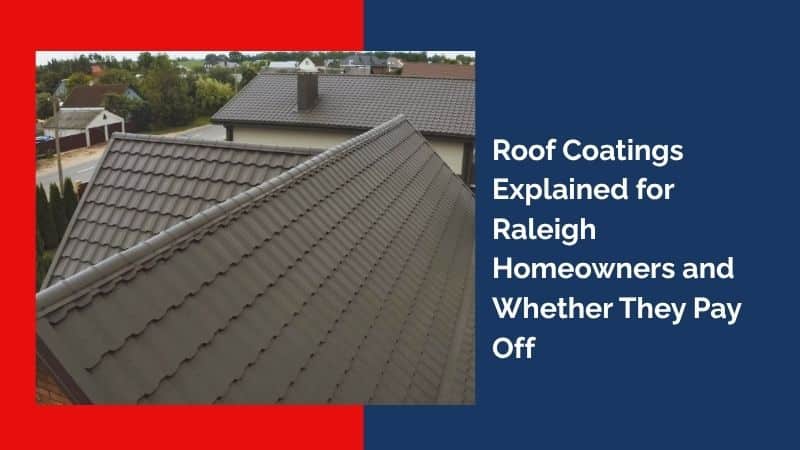
How a Roof Is Prepared for a Coating
Preparation decides whether a coating succeeds or peels. The roof must be cleaned of dirt, mildew, and loose material, and any failed seams, blisters, or punctures need to be repaired. Flashing and penetrations are resealed, and the surface is primed when the manufacturer requires it. The roof must also be dry, and weather matters, since many coatings need a window of dry, moderate temperatures to cure properly. Skipping steps to save time is the most common reason coatings fail early, so ask any contractor to describe their preparation process in detail before you agree to the work.
Cost and Lifespan Expectations
A coating usually costs less than a full replacement, which is its main appeal. Lifespan varies by product, thickness, and exposure, and many systems are expected to protect a roof for roughly a decade or two when installed correctly and maintained. Homeowners should remember that a coating is not a one-time fix. Periodic inspections, cleaning, and occasional recoating keep the system performing. When you compare costs, weigh the coating price plus future maintenance against the remaining life it adds, and compare that figure with what a replacement would cost over the same period.
Coating, Repair, or Replacement
The best decision comes from the condition of the roof, not from a product category. A healthy roof with surface wear is a good candidate for a coating. A roof with isolated problems usually needs targeted repair first. A roof with widespread leaks, soft spots, or old age typically needs replacement. Raleigh humidity, pollen, and heavy summer sun all influence how surfaces age, so local experience matters. Camden Roofing inspects the roof, explains what we find in plain language, and recommends the option that fits the condition and your budget rather than pushing a single solution.
How Raleigh Weather Affects Coating Performance
Raleigh gives roofs a demanding mix of conditions. Summer sun and heat drive surface temperatures far above the air temperature, humidity encourages algae and mildew, and spring pollen leaves a film that holds moisture against the roof. Sudden thunderstorms can drop heavy rain on a coating that has not fully cured, which is why timing an application matters so much.
Reflective coatings can lower the heat a low-slope roof absorbs, which may ease the load on cooling systems in the rooms below, though results depend on insulation, ventilation, and the color of the product. Choosing a coating built for humidity and ultraviolet exposure, and scheduling the work during a stable dry stretch, gives the system its best chance of reaching its full lifespan.
Smart Vetting Steps Before Anyone Coats Your Roof
A few direct questions protect you from a poor installation. Ask which product will be used and whether the manufacturer approves it for your exact roof surface. Ask how the roof will be cleaned, what repairs will happen first, and how many coats or what thickness will be applied. Request the warranty terms in writing, including what the manufacturer covers and what the installer covers.
Finally, ask how the contractor will handle drainage problems, since a coating cannot correct ponding on its own. A company that answers these questions clearly and offers to show you the condition of the roof before and after is far more likely to deliver a result that lasts.
Roof coatings have come a long way, and in the right setting they extend roof life at a fair price. In the wrong setting, they hide problems and waste money. Camden Roofing helps homeowners and property owners across Raleigh and Charlotte weigh the options honestly. To learn more about our team or explore our roof repair services, schedule an inspection before you commit to any coating.
Frequently Asked Questions
1. What is a roof coating and how does it work?
A roof coating is a liquid layer applied to a roof surface that cures into a seamless, protective membrane, sealing small cracks and reflecting sunlight.
2. Can I apply a roof coating over asphalt shingles?
Generally no, because most shingle manufacturers advise against it, and coatings can trap moisture or affect warranties. They are better suited to flat, low-slope, and metal roofs.
3. How long does a roof coating typically last?
Many coatings last roughly ten to twenty years depending on the product, thickness, and weather exposure, provided the roof is prepared properly and inspected regularly.
4. Is painting my roof the same as applying a coating?
No, ordinary paint is not engineered to handle roof movement, ponding water, or ultraviolet exposure, while roof coatings are formulated specifically for those demanding conditions.
5. When is a roof too damaged for a coating?
If decking is rotted, insulation is wet, or leaks are widespread, a coating will not help, and repair or full replacement becomes the sensible option.